Showing posts with label insults. Show all posts

Sep 12, 2023

Phalli and Defecation – How I Ended up as Co-author of an International Article

The first peer-reviewed article in which I am a co-author has just been published (available here). How I ended up as one of the authors of this international article was totally unexpected. It was all the more surprising since I had not published anything in English before this and I did not know the other authors of the article. So let me tell you how it all happened.

The phallic stone found at Vindolanda 19 May 2022.
Photo: vindolanda.com

In May 2022, during archaeological excavations at the Roman military camp of Vindolanda located along Hadrian's Wall in Northern England, a curious stone was discovered. It had a large phallus carved into it along with the Latin inscription SECVNDINVS CACOR. Numerous phalli carved into stones have been found at Vindolanda but none of the other phalluses are accompanied by such inscriptions. This fact along with the unusual Latin word cacor make this latest phallus stone from Vindolanda exceptional. The word cacor is clearly related to the Latin verb cacare which refers to shitting, but this form is not attested in any other ancient sources.

My tweet on 26 May 2022.

About a week later the discovery was reported online, and I happened to read the news on social media (available here). I immediately began pondering the engraved text and its possible meanings in relation to the large phallus. The interpretation mentioned in the press release, "Secundinus, the shitter", didn't seem wholly satisfactory to me, or at least not the only possible one, so I decided to share my own interpretations on Twitter. I considered the significance of the word cacor and its connection to defecation in light of other ancient sources.

One of the comments on Twitter.

My tweets were commented on by the user LatinNowERC who was part of the research team that reported the discovery. At the time I didn't know any of these researchers. It seems that my interpretations were in line with those of the Vindolanda team, and LatinNowERC asked if they could contact me via email. Later that same day I received a message from Alex Mullen, assistant professor at the University of Nottingham (now full professor) and the principal investigator of the Latin Now ERC project. She was planning an article about the Secundinus stone and asked if I would be interested in contributing to the article as co-author. Of course I was interested when asked by such an accomplished scholar, and to write about phalli and defecation no less!

I didn't hear back from Alex during the summer, but then I suddenly met her at an epigraphy conference in Bordeaux in August, and we discussed the article idea further. Apart from this conference, the work on the article was done entirely via email and shared files. Professor Alexander Meyer from the University of Western Ontario I have not met in person so far but I hope I will. We worked well together and the article took shape quickly. My part in the article primarily involved the cultural context and the various interpretations of the Secundinus stone.

At the conference in Bordeaux. I would've liked to have a photo
with Alex here but it seems we never took one together.

The article was mostly done by December 2022. We submitted it to the journal Britannia in January 2023, and made the necessary revisions during the spring. The article was accepted for publication in June, and it was published electronically in Britannia on 6 September 2023. Alexander and Alex also wrote a post in one of Vindolanda's blogs based on our article.

Collaborating with international researchers was a great and enlightening experience, particularly because I haven't published articles before this since my PhD dissertation will be a monograph. I got to see how an article evolves from an idea to publication and how the publishing process works. My more experienced colleagues were encouraging and I felt that my expertise in ancient phalli and scatology had a concrete impact on this publication. It was also great to see how these topics connect researchers from different parts of the world.

Thank you Alex and Alex for this opportunity!

Aug 14, 2023

Insults in Pompeian Graffiti

Over 10 000 wall inscriptions have been discovered in Pompeii. Some of them were painted (dipinto), some scratched in stone or plaster (graffito) and some were made with charcoal or chalk, for example. There are a couple hundred writings that can be interpreted as insults such as the one seen in the photo: Leporis fellas, Leporis, you suck dick. I've collected some examples of these in the list below. All translations are my own.

NB: The Latin word cinaedus is difficult to translate. As an insult it usually meant a male prostitute or a man penetrated in anal sex. Such men were considered perverse, feminine and generally immoral. For lack of a better word I will use 'queer' in my translations.

CIL IV = Corpus inscriptionum Latinarum, vol. 4, Berlin, 1871–.

CIL IV 763
Asbestus cunnum linges Asbestus, you lick cunt.
In a public bath (VII 1,8), written with chalk
CIL IV 1253
Iustus Lemnio felatore[i?] sal(utem)
Iustus greets Lemnius the cocksucker.
Exterior wall (VI 8,3–4), graffito
CIL IV 1388a
Timele extaliosa Thymele has a big ass.
Exterior wall (VI 11,15–16), graffito
CIL IV 1391
Veneria Maximo mentla(m) exmuccaut per vindemiam tota(m) et relinque(t) putr(em) ventre(m) mucei os plenu(m) Veneria licked clean Maximus' cock during the whole harvest and left her stomach putrid and her mouth full of slime.
Exterior wall (VI 11,16), graffito
CIL IV 1516
hic ego nu[nc f]utui formosa(m) fo[r]ma puella(m) laudata(m) a multis set lutus intus {e}erat Here I fucked a girl with a nice appearance. She was praised by many but there was muck inside.
Exterior wall (VI 14,43), graffito. The beginning is repeated in CIL IV 1517. Poetic meter: elegiac couplet.
CIL IV 1772
Secundus Cararii cinedus Secundus, slave of Cararius, is a queer.
Exterior wall (VII 7,32, Temple of Apollo), graffito
CIL IV 1816
Epaphra glaber es Epaphras, you're hairless.
In the basilica (VIII 1,1), graffito
CIL IV 1820
Chie opto tibi ut refricent se ficus tuae ut peius ustulentur quam ustulatae sunt Chius, I hope your piles rub open again so that they become inflamed worse than before.
In the basilica (VIII 1,1), graffito
CIL IV 1825
Cosmus Equitiaes magnus cinaedus et fellator est suris apertis Cosmus, the slave of Equitia, is a big queer and a cocksucker with legs wide open.
In the basilica (VIII 1,1), graffito
CIL IV 1826
Phileros spado Phileros is a eunuch.
In the basilica (VIII 1,1), graffito. Below the graffito a man with a large penis was drawn.
CIL IV 1850
Phoebus felat Phoebus sucks cock.
In the basilica (VIII 1,1), graffito
CIL IV 1881
Virgula Tertio suo indecens es Virgula to his friend Tertius: you're shameless.
In the basilica (VIII 1,1), graffito. Virgula is usually a male name.
CIL IV 1948
Lucilla ex corpore lucrum faciebat Lucilla made profit with her body.
In the basilica (VIII 1,1), graffito
CIL IV 1949
Oppi emboliari fur furuncule Oppius, you buffoon, thief, pilferer.
In the basilica (VIII 1,1), graffito
CIL IV 2254
ratio mi cum ponis Batacare te pidicaro When you pay me, Batacarus, I will fuck you in the ass.
In a brothel (VII 12,18), graffito. Accompanied by a drawing of a phallus.
CIL IV 2275
Fortunata fellat Fortunata sucks cock.
In a brothel (VII 12,18), graffito
CIL IV 2288
Synethus Faustillam futuit obiqe rite Synethus fucked Faustilla well everywhere.
In a brothel (VII 12,18), graffito
CIL IV 2375
Ampliate Icarus te pedicat Salvius scripsit Ampliatus, Icarus fucks you in the ass. Salvius wrote (this).
In a private house (I 4,5), graffito
CIL IV 2400
Satur noli cunnum lingere extra porta(m) set intra porta(m) rogat te Arpogra ut sibi lingas mentula(m) at fellator quid Satur, don't lick cunts outside of the gate but inside. Harpocras asks you to lick his cock, but cocksucker what...
In a private house (IX 1,22), graffito
CIL IV 2420
Astus hic pedicatur Astus is fucked in the ass here.
Theater corridor (VIII 7,20), graffito
CIL IV 3103
Verecundus [- - -] mentla(m) ling(it) Verecundus ... licks cock.
Exterior wall (VII 3,27–28), graffito
CIL IV 3146
Secundus hicacat hi[- - -]at hic cacat Secundus shits here, shits here, shits here.
In a private house (VII 2,3), graffito
CIL IV 3925
Saturnine cunnum lingere noli Saturninus, don't lick cunt.
Exterior wall (I 2,19), graffito
CIL IV 3990
L(ucius) Statius ((mulieris)) l(ibertus) Philadelpus fur est Lucius Statius Philadelphus, a freedman of a woman, is a thief.
In a private house (I 3,3), graffito
CIL IV 4001
Glyco halicaria Glyco is a mill whore.
In a bakery (IX 3,5), graffito
CIL IV 4185
Sabina felas no(n) belle faces Sabina, you suck cock, but you don't do it well (or: that's not nice).
In a private house (V 2,i), graffito
CIL IV 4192
Ecidia fellatrix Ecidia is a cocksucker.
In a private house (V 2,i), graffito
CIL IV 4206
Helene cina(ede) vetusc(ule) Helenus, you old queer.
In a private house (V 2,i), graffito
CIL IV 4264
Iucundus cunum lingit Rusticae Iucundus licks Rustica's cunt.
Exterior wall (V 2,a–b), graffito
CIL IV 4533
G(aius) Hadius Ventrio eques natus Romanus inter beta(m) et brassica(m) Gaius Adius Ventrio, a knight, was born a Roman between a beat and a cabbage.
In a private house (VI 14,37), graffito
CIL IV 4699
Isidorus verna Putiolanus cunnuliggeter geter Isidorus, a homeborn slave, from Puteoli is a cuntlicker... cker.
Exterior wall (VI 15,26), graffito
CIL IV 4765
Aephebe ardalio es Ephebus, you're a busybody.
In a private house (VII 7,5), graffito
CIL IV 4954
Fortunate linge culu[m] Fortunatus, lick ass!
Exterior wall (VIII 6,6–7), graffito
CIL IV 4957
miximus in lecto fateor peccavimus hospes si dices quare nulla matella fuit We peed in the bed, we confess; we did wrong, host. If you ask why, there was no chamber pot.
Exterior wall (VIII 6,7), graffito. Poetic meter: elegiac couplet. Read more on Twitter.
CIL IV 5110
Eracla fur Heracla is a thief.
In a private house (IX 5,18), graffito
CIL IV 5148
Romulus cal'v'os Romulus is pretty bald.
Exterior wall (IX 5,19), graffito. The graffito originally read calos but someone added a small letter v turning the word into calvos which sounds like calvus (bald).
CIL IV 5244
Marthae hoc trichilinium est nam in trichilino cacat This is Martha's dining room because she shits in the dining room.
In a latrine of a private house (IX 8,6), graffito
CIL IV 5263
Lenas cunnulingus Lenas, the cuntlicker.
In a private house (IX 9,12.13), graffito
CIL IV 5278
ling[- - -] mentula(m) Ptolomaeus Lick cock, Ptolemaeus!
In a private house (IX 9,12.13), graffito, accompanied by a drawing of a phallus.
CIL IV 7089
imanis metula es You're a huge dick.
Exterior wall (V 7,7), graffito. Can also be interpreted as imanis, metula, es 'Dick, you're huge' or imanis metula es(t) 'The dick is huge'. Read more on Twitter.
CIL IV 8322k
Somene nequ(am) Somene is worthless.
In a private house (I 10,4), graffito
CIL IV 8698
Vettius cu[n]num liget Optatus Vettius licks cunt. Optatus (wrote this?)
In a column of the palestra (II 7,1–10), graffito
CIL IV 8715b
Iucu(n)dus male cala(t) Iucundus fucks badly.
In a column of the palestra (II 7,1–10), graffito
CIL IV 8805
VII idus sep[tem]bres Q(uintus) Postumius rogavit (ut?) A(ulum) Attium pedicarim On September 7th Quintus Postumius asked me to fuck Aulus Attius.
In a column of the palestra (II 7,1–10), graffito
CIL IV 8841
Martialis fellas Proculum Martialis, you suck Proculus' cock.
Exterior wall (III 3,6), graffito
CIL IV 8898
Tiopilus canis cunnu(m) lingere noli puellis in muro Theophilus, you dog, don't lick girls' cunts next to the wall.
Exterior wall (III 5,3), graffito
CIL IV 9027
Secundus felator rarus Secundus is a rare kind of cocksucker.
In a private house (VII 6,28), graffito
CIL IV 9945
Erotaria vetula selotia Erotarin, you jealous old crone.
Necropolis of Porta Nocera, exterior wall of tomb 4EN, dipinto, selotia = zelotypa(?).
CIL IV 9228
Secundilla felatrix Secundilla is a cocksucker.
Atrium of Villa dei Misteri, graffito
CIL IV 10004
Eupla laxa landicosa Euplia is loose and has a huge clitoris.
In a private house (I 9,5), graffito
CIL IV 10041d
Piramo cotttdie linguo I lick Pyramus' dick every day.
In a private house (I 11,14), graffito
CIL IV 10093c
Brutus canis est Brutus is a dog.
In the entrance to a private house (II 1,10), graffito
CIL IV 10150
[cum] de[c]oxisti octies tibi superat ut (h)abeas sedecies coponium fecisti cretaria fecisti salsamentaria fecisti pistorium fecisti agricola fuisti aere minutaria fecisti propola fuisti laguncularia nunc facis si cunnu(m) linxse{e}ris consummaris omnia Now that you've gone bankrupt eight times, it remains for you to do it sixteen times. You've worked as an innkeeper, sold chalk and salted fish, you wer a baker and a farmer, sold small bronze items, worked as a retailer, and now you make small bottles. If you lick cunt, you will have done it all.
Exterior wall (II 4,10), graffito, written in one long line.
Julkaisematon
Leporis felas Leporis, you suck dick.
At the entrance to a private house (V 3, Casa del Giardino), graffito
Julkaisematon
Nicia cinede cacator. Nicia, you're a queer and a defecator.
In a bar (V 3, thermopolium), graffito

Dec 21, 2022

Ars Vituperandi – The Roman Art of Insult

Insult is a universal cultural practice and insults are known from the oldest written sources. In ancient Rome insults were not a marginal phenomenon. They are found in all kinds of Roman sources from ordinary wall inscriptions to literature and rhetoric. The Romans were veritable masters of insult. In this blog post I want to highlight some of the relevant sources and show some examples of Roman insults and reflect on the value of insults as a source for academic research.

A Roman speaker,
Vatican Museums.
Roman rhetoric

According to theories of rhetoric it was important to choose the style and figures of speech with regard to one's audience and the occasion. Invective was one of the genres of epideictic speech and was used especially in political and judicial oratory. In his work Institutio Oratoria the Roman rhetorician Quintilian gives instructions on how, when and why a speaker should use rhetorical invective. The basic principle is that the speaker should praise that which is honourable and blame that which is shameful.

In judicial rhetoric particular attention was drawn to the defendant's and other involved parties' character. The defending counsel was supposed to praise the defendant and describe their virtues, whereas the prosecutor was supposed to highlight the defendant's vices and disgrace them. It was thought that a depraved person was more likely to commit a crime than a virtuous one. Similar praise and blame were used in political speeches as well. Politicians sought to influence the popularity of their peers and other magistrates by praising or insulting them publicly.

In his work De Inventione, which focuses on how to choose and arrange the arguments of a speech, Cicero mentions topics which a speaker should pay attention to such as a person's place of birth, nature, mental capacity, appearance, upbringing, manner of life, profession, achievements, family and friends. These same topics can be used for both praise and blame depending on the purpose of the speech.

Cicero (106–43 BCE)

An excellent example of rhetorical invective is the speech In Pisonem which Cicero gave at the Roman senate. He spoke against Lucius Calpurnius Piso who was Cicero's political opponent and accused him of exploiting the province of Macedonia when he was the governor of the province. Cicero didn't mince words while rebuking Piso.

Right in the beginning of his speech (In Pisonem 1) Cicero describes Piso as ugly:

We were not deceived by your slavish complexion,
your hairy cheeks, and your discoloured teeth

Next, he turns his attention to Pisos character, intelligence and talent as orator:

There were but few of us who knew of your filthy vices,
few the crassness of your intelligence
and the sluggish ineptitude of your tongue.

Later on (In Pisonem 10) Cicero describes Piso's morals, what kind of bad company he keeps, and how dissolute a life he leads:

Piso meanwhile, neither so elegant nor so artistic a debauchee,
lolled amid his tipsy and malodorous Greeks, – –
and in it none can say whether that wretch spent more time
in drinking or in vomiting or in excreting his potations.

Cicero has much more to say about Piso. It was claimed that he never spoke publicly at the Forum. He hadn't achieved anything worth mentioning. He was elected to public office by accident because he shared his name with his ancestors. He was a thief who took bribes. He wore strange clothes, was a drunkard and a debauchee who often visited brothels.

Throughout the speech Cicero insults Piso in various terms calling him a monster (belua, pecus), dog (canis), ass (asinus), murderer (carnifex), plague (pestis), criminal (scelus), enemy (hostis) and traitor (proditor). Similar insults were used in Roman comedy as well.

Theatrical masks in relief, Ostia.
Comedy

Most of the extant Roman comedies come from Plautus and Terence who are the most famous Roman playwrights. Roman comedy was a continuation of the Greek tradition of comedy, the most famous representatives of which were Aristophanes and Menander. The themes of these comedies were often taken from everyday life, and some of the common characters were slaves, soldiers, prostitutes, young lovers and old men and women. The text and the dialogue of the plays reflected popular language and idioms. This included insults and swearing which were an essential part of comedic expression and vocabulary.

Plautus (ca. 254–184 BCE)

Let's take Plautus' play Bacchides as an example of insults in comedy. The play is about two sisters who are prostitutes and who share the name Bacchis. Men fall in love with wrong sisters, people end up in inconvenient situations, arguments ensue, and deception is the norm. This all leads to heated exchanges where insults are tossed back and forth. In the end everybody ends up happily in the same bed in a brothel.

Here are some insults coined by Plautus:

You triple-dyed poisoner (terveneficus)
(Bacchides 813)

O you poor, poor fool (stultus)
(Bacchides 814)

He’s now walking around as the scum of the earth,
he doesn’t have his wits or his senses any more,
and he’s worth as much as a rotten mushroom. (fungus putidus)
(Bacchides 820–821)

You hardened criminal (scelerum caput)
(Bacchides 829)

Fresco from Pompeii,
National Archaeological Museum of Naples.
Poetry

Roman poetry usually brings to mind epic stories of heroes and passionate love poems. One popular genre of Roman poetry was satire of which insults were a crucial part. Some of the most famous writers of poetic satire were Catullus, Horace, Martial and Juvenal. Horace's poems represent a light-hearted type of satire based on witty humour, whereas Catullus and Juvenal use much more stinging language. Martial is somewhere between these extremes with his keen and pointed verses which take their themes from Roman everyday life and habits. Besides poetry the prose work Satyricon by Petronius can also be regarded as satire. The adventures of the three main characters are often spiced up by sharp dialogue and insult.

Catullus (ca. 84–54 BCE)

Catallus is best known for his love poems to one Lesbia, but he also wrote some nasty invective. He had a lot to say about his contemporaries such as Caesar and his associates. Catullus had this to say about Mamurra who served under Caesar in Gaul:

Who can look upon this, who can suffer this,
except he be lost to all shame and voracious and a gambler,
that Mamurra should have what Gallia Comata
and farthest Britain had once?
Pansy Romulus, can you see and endure this?
(Poem 29, verses 1–5)

Mamurra became rich through these military campaigns and the help of Caesar. Catullus also rebukes Caesar – calling him Romulus – for allowing Mamurra's shameless actions. In another poem (94) Catullus calls Mamurra simply a dick!

Rufus mentioned in the next poem is probably Marcus Caelius Rufus, a friend of Catullus. Rufus had an affair with Clodia, the same woman whom Catullus also loved. This poem apparently refers to this love triangle and the deceit that Catullus felt he had suffered because of the affair between Rufus and Clodia.

Rufus, whom I, your friend, trusted in vain,
and to no purpose—in vain? nay, rather at a great and ruinous price—
have you stolen into my heart and burning into my vitals torn away,
alas, all my blessings? Torn away, alas, alas!
you the cruel poison of my life, alas, alas!
you the deadly bane of my friendship.
(Poem 77)

In the end Clodia betrayed both men and incurred the hatred of many others as well. One of Cicero's speeches, Pro Caelio, recounts parts of this story with Clodia. Rufus was accused of political violence and murder. Cicero's defence was partly based on defaming Clodia as he sought to show that the jealous Clodia, who had been rejected by Rufus, was behind the accusations. This speech is another great example of Cicero's skills of rhetorical invective.

In his other poems Catullus calls people greedy, ugly, stupid and perverse, among other insults. Catullus did not hesitate to use even the crudest Latin obscenities.

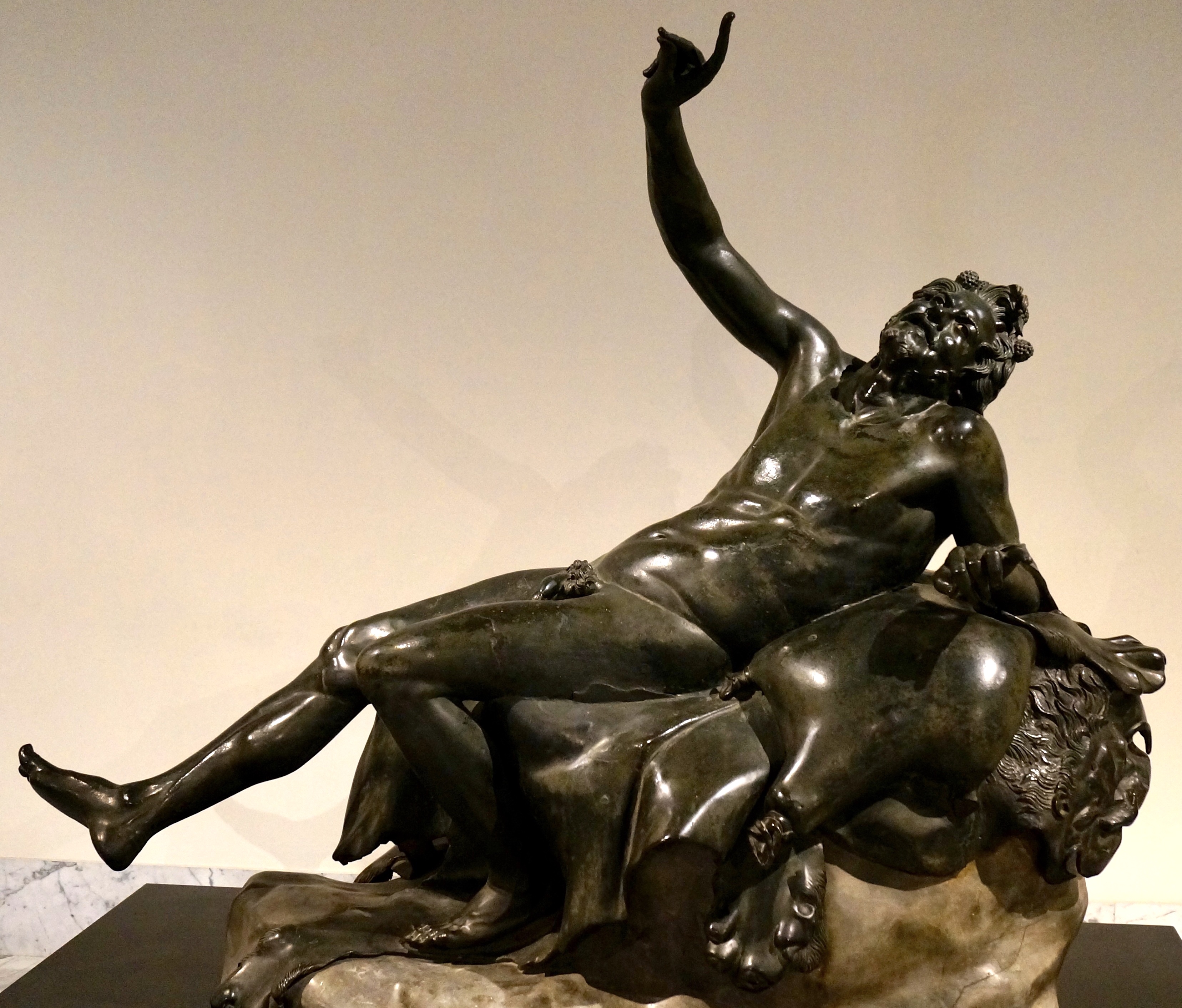
Drunken satyr, found at Herculaneum,
National Archaeological Museum of Naples.
Martial (ca. 40–102 CE)

Martials followed the model of Catullus in many ways. Both wrote shameless ad hominem attacks; the difference being that Catullus openly disparaged some of his famous contemporaries, whereas Martial maintained that he never insulted anyone with their real name. Martial wanted to comment on vices and not to offend anyone personally. This in no way diminishes the ingenuity and acuity of his insults.

Martial pays attention to people's questionable morals and behaviour such as drunkenness, thievery and deviant sexuality.

Anybody who thinks that Acerra reeks of yesterday’s wine misses his guess.
Acerra always drinks till sunrise.
(Poem 1.28)

This short and succinct poem reveals Acerra as a drunkard who drinks through the night. This kind of structure where the point of the insult is revealed at the end is typical of Martial's epigrams.

Another favourite topic of Martial's was married life. He wrote about one-night stands, unfaithfulness, adultery and murders of husbands and wives. Here's an example of this last theme:

Chloe the murderess inscribed on the tombs of her seven husbands that
“she did it.” What could be plainer?
(Poem 9.15)

Chloe buried her seventh husband. It was customary in Roman funerary inscriptions to mention who took care of the burial, often with a name and fecit, 'so and so made this'. Martial insinuates that Chloe was responsible for more than just burying her husband. Inheritance was often the motive for murdering one's partner. Legacy-hunting is a recurring theme in Martial's poems. Young men and women pursue older partners in the hope of eventually inheriting them, and old men and women enjoy and take advantage of their young lovers' flattery and gifts.

In this next poem Martial describes a man lying on a couch enjoying a dinner. The man is bald and toothless but tries to conceal this.

That person who lies lowest on the middle couch,
he of the bald pate with its three strands of hair and its trails of pomade,
who picks his loose mouth with smoothed sticks of mastic,
is a liar, Aefulanus: he has no teeth.
(Poem 6.74)

Martial often portrays bald and toothless people in his poems. Making jokes at the expense of someone's physical appearance may seem distasteful to us but it appears to have been very popular in ancient Rome. Other stereotypical characters portrayed by Martial include lusty women, impotent men, greedy and cruel owners of slaves and incompetent doctors to name just a few.

Graffiti

Wall inscriptions have been found all over the ancient Roman empire. The most important collection of over 10 000 documented examples was preserved in Pompeii and its environs thanks to the eruption of Vesuvius in 79 CE. Such unofficial and mundane inscriptions could be made by anyone who could write by scratching into or painting on the walls of houses or on other suitable surfaces. Graffiti in a strict sense are those inscriptions which were incised with a sharp instrument into the surface of a wall. These were usually quite unnoticeable unlike modern graffiti. Most of Pompeian graffiti were written in private houses and public buildings and usually in very visible locations. So, it seems that writing on the walls was an acceptable or at least a tolerated practice in Pompeii.

A caricature drawing,
Villa of Mysteries, Pompeii.
The contents of ancient graffiti include names, greetings, expressions of love, shopping lists, drawings, alphabets, poems, curses and – of course – insults. Even the crudest Latin obscenities were used in graffiti, such as were usually avoided in Roman literature. In addition to textual insults there were many caricature drawings. The drawing in the picture to the right was (CIL IV 9226) found in the atrium of a private villa in Pompeii. Above the drawing there is the text Rufus est 'this is Rufus'. (This is not the Rufus Catullus wrote about. He lived a hundred years earlier.) In the drawing Rufus is depicted as bald, small-eyed and with a large nose, all features that were commonly disparaged in Roman insults.

Here is a selection of insults from Pompeii:

Epaphra, you are hairless.
(CIL IV 1816)

The hairlessness of Epaphra is perhaps due to depilation which was regarded as feminine and improper for men.

Virgula to his Tertius: you are indecent!
(CIL IV 1881)

A man named Virgula calls out another man. The pronoun suus 'his' indicates a close relationship so this might be a case friendly banter rather than an insult.

Ladicula is a thief.
(CIL IV 4776)

This is a rather straightforward insult unless Ladicula was actually a thief in which case it may be a warning to others dealing with her.

Serena hates Isidorus.
(CIL IV 3117)

A few other graffiti have been found elsewhere in Pompeii calling one Isidorus a cuntlicker and a prostitute. This may be one and the same person.

Lucilla made a profit with her body.
(CIL IV 1948)

Lucilla is called a prostitute. According to Roman law, prostitutes lost some of their civil rights and were officially under a shameful status.

You're a huge dick.
(CIL IV 7089)

This is one of my personal favourites among the Pompeian insults. It was written on an external wall of a house so that anyone passing by and reading the graffito became the target of the insult.

Felix, you defecate.
(CIL IV 2075)

This graffito is an embarrassingly public announcement of Felix's bodily functions.

Most of the graffiti were short and simple, but sometimes the scribblers were inspired to create longer and more sophisticated writings on the walls, even turning some of them into poetic metre.

Chius, I hope your piles again become sore
and burn worse than they did before.
(CIL IV 1820)

Chius suffers from haemorrhoids which were thought to be the result of excessive anal sex. This may also be a joke concerning the man's name. Both piles and figs were called ficus in Latin and the best figs came from the island of Chios which the name Chius refers to.

Gaius Hadius Ventrio, knight, born Roman between a beet and a cabbage.
(CIL IV 4533)

Gaius Hadius Ventrio was no real knight but a Roman noble belonging to the upper class called knights. Gaius is said to be of humble origins. A Roman man's reputation depended largely on his background and birth.

We wet the bed, innkeeper. I admit we did wrong.
If you ask why, there was no chamber pot.
(CIL IV 4957)

This graffito was found next to a doorway leading into a building that may have been an inn. This message was perhaps left as feedback by a guest who stayed overnight at the establishment. What is more, the graffito was written in elegiac metre:

Míximus ín lectó fateór peccávimus hóspes.
Sí dicés quaré, || núlla matélla fuít.

Insults as a source of research

Roman insults reflect the social norms of the Roman society and offer interesting and meaningful perspectives into ancient Roman culture. The study of insults advances our understanding of the attitudes and prejudices prevalent in the Roman society. Comparing different sources, it is possible to examine how social context and various stereotypes influenced the content and form of invective, and how insults were put to use in different situations. Insults, especially those in graffiti and other informal sources, also reflect the everyday interactions and language of the ordinary people.

Ancient insults also provide a great point of comparison to modern hate speech. We can investigate how prejudices and social norms related to defamation have changed or stayed constant in the West from antiquity to modern times, and what sort of mechanisms promote and enable hate speech. In recent years this historical dimension of hate speech has come more and more into focus. This point of view is crucial when we seek to understand what kind of thinking hate speech arises from, and what it has led to in different times. Historical sources show that hate speech is connected to prevalent cultural norms and attitudes in each society. This becomes particularly apparent when we analyse prejudices and stereotypes that insults were based on.


This blog post is based on a talk I gave at an event organized by Paideia association at the public library of Turku on October 7th 2022.

More on Roman insults in this blog:
Sources of translations:

Plautus. Amphitryon. The Comedy of Asses. The Pot of Gold. The Two Bacchises. The Captives. Edited and translated by Wolfgang de Melo. Loeb Classical Library 60. Cambridge, MA: Harvard University Press, 2011.

Catullus. Tibullus. Pervigilium Veneris. Translated by F. W. Cornish, J. P. Postgate, J. W. Mackail. Revised by G. P. Goold. Loeb Classical Library 6. Cambridge, MA: Harvard University Press, 1913.

Cicero. Pro Milone. In Pisonem. Pro Scauro. Pro Fonteio. Pro Rabirio Postumo. Pro Marcello. Pro Ligario. Pro Rege Deiotaro. Translated by N. H. Watts. Loeb Classical Library 252. Cambridge, MA: Harvard University Press, 1931.

Martial. Epigrams, Volumes I–III. Edited and translated by D. R. Shackleton Bailey. Loeb Classical Library 94, 95, 480. Cambridge, MA: Harvard University Press, 1993.

The translations of Pompeian graffiti are my own. All photos are my own.

Nov 1, 2022

Popular Beliefs about Doctors in Ancient Rome

Ancient Romans held a wide range of often contradictory views about physicians. Medical writers tended to praise the knowledge and skills of physicians, while other sources often described physicians as dishonest, incompetent and deadly charlatans. I will describe some of the most common beliefs about physicians in non-medical Roman sources such as Pliny the Elder, Martial, inscriptions and graffiti. But first, a few words about the ancient medical art as background to these popular beliefs.

Medical art in ancient Rome

Traditional Roman medicine – before the introduction of Greek medical theories – was based on natural treatments administered by family members, not by professional physicians. The head of the family, paterfamilias, was responsible for the wellbeing of his family and servants. Greek doctors started to move to Rome during the first centuries BC and brought with them new theories, which were slowly incorporated into Roman medicine. Many Romans were skeptical of the Greek influence, but Greek doctors were eventually accepted, especially among the aristocracy.

Aeneas treated by a surgeon.
(National Archaeological Museum of Naples, photo: Joonas Vanhala)

There were several competing theories on the human physiology and how ailments should be treated. One of the most well-known theories is that of the bodily fluids, but other aspects such as diet, heat and climate were thought to affect one’s health as well. The physician’s job was to make a diagnosis and suggest a course of treatments. Some of the most common treatments included diets, cold and hot baths, bloodletting and vomiting to balance the bodily fluids, medicines, herbs, magical cures, surgery and so on. Many of these treatments were, of course, ineffective and sometimes even dangerous to the patient. Healing was also sought in the sanctuaries of the gods of healing such as Aesculapius or through magical aids such as potions and amulets. A great number of votive gifts, offered as thanks to the gods for healing, have been found.

Roman votive gifts depicting healed parts of the body.
(Archaeological Museum of Bologna, photo: Joonas Vanhala)

There were various medical practitioners. Most of the physicians in Rome were Greek and usually from the lower classes. Greek doctors were the ones with the greatest theoretical knowledge, but there were others whose learning was based on a more practical take on medicine such as surgeons, midwives and herbalists. Most of these could be called medici in Latin, although in many instances this term refers specifically to the Greek learned physicians.

A relief depicting a midwife.
(Isola Sacra, photo: Joonas Vanhala)

There was no standardized education, and no qualifications were needed to be able to call oneself a physician. This was naturally reflected in the quality of treatment. On the other hand, we know of doctors specialized in the treatment of eyes, ears, teeth and fistulae, for instance, which indicates a dedication to a particular field of medicine.

Roman medical instruments also show that the ancient doctors could perform a number of practical treatments such as placing a catheter to aid urination, cauterize unhealthy tissue, remove teeth, and perform some basic surgical operations such as removing cataracts from the eye.

Roman medical instruments found in Pompeii.
(National Archaeological Museum of Naples, photo: Joonas Vanhala)

Cato the Elder: Greek physicians trying to destroy the Romans

One of the earliest accounts on physicians comes from Cato the Elder. He wanted to uphold traditional Roman values and practices and was skeptical of the Greek influence in Rome. Of the Greeks and their medicine, he had this to say:

They [Greeks] are a quite worthless people, and an intractable one, and you must consider my words prophetic. When that race gives us its literature it will corrupt all things, and even all the more if it sends hither its physicians. They have conspired together to murder all foreigners with their physic, but this very thing they do for a fee, to gain credit and to destroy us easily. (Pliny the Elder, Natural history 29.7)

For Cato the two main points of complaint were that Greek physicians were ill-willed and wanted to harm people, and that they demanded money for their services. These ideas are expressed in later Roman sources as well. Cato’s view is based on a general prejudice against the Greeks and their culture that he saw as corrupting the Roman society.

Pliny the Elder: dishonest, greedy and dangerous physicians

Another well-known account on medicine and physicians was written by Pliny the Elder. His description reflects many of the beliefs and prejudices held by the Romans. Pliny follows Cato when he describes Greek physicians as dangerous and willing to kill:

Physicians acquire their knowledge from our dangers, making experiments at the cost of our lives. Only a physician can commit homicide with complete impunity. (Pliny the Elder, Natural History 29.8)

While Cato argued that the Greek physicians were simply malicious, Pliny saw a clear motive for the harm done by physicians, medical knowledge through experiments.

Pliny laid down further accusations of poisonings, conspiracies and adulteries:

For what has been a more fertile source of poisonings? Whence more conspiracies against wills? Yes, and through it too adulteries occur even in our imperial homes… (Pliny, NH 29.8)

He also accused physicians of avarice and greed:

Let me not even bring charges against their avarice, their greedy bargains made with those whose fate lies in the balance, the prices charged for anodynes, the earnest-money paid for death… (Pliny, NH 29.8)

Pliny portrays physicians as deliberately harming their patients for their own gain. This may have some basis in reality considering the number of accounts in Roman sources of such nefarious dealings, especially in aristocratic and imperial households.

One more criticism that Pliny raises against physicians is their incompetence:

It is plainly a showy parade of the art, and a colossal boast of science. And not even the physicians know their facts… (Pliny, NH 29.8)

Pliny is opposed to Greek doctors much the same as Cato, because of a general prejudice against the Greeks. It seems that many upper-class Romans were skeptical about the corrupting influence of Greek ideas and their threat to traditional Roman values and virtues even in the 1st century AD.

This aversion to Greek physicians seems to have spilled over to more popular forms of art such as Roman comedy and satire. In these genres the focus is not as clearly on the Greek aspect of medicine, but it still lingers in the background. The point of these biting descriptions is more specifically on the misconducts of doctors and the dangers they pose to their patients.

Martial: incompetent and deadly physicians

One of the most prolific writers of satirical epigram was Martial who wrote many poems specifically about doctors. In this poem the doctor and his students do more harm than good:

I was out of sorts; but at once you visited me, Symmachus, accompanied by a hundred pupils. A hundred hands chilled by the north wind touched me. I did not have a fever, Symmachus. Now I do. (Mart. 5.9) 

Many of the physicians in Martial’s epigrams end up killing their patients. An extreme case is this one where the mere sight of a doctor is enough to kill a man:

Andragoras bathed with us, ate a cheerful dinner; the same man was found dead in the morning. Do you enquire the cause of so sudden a demise, Faustinus? In his dreams he had seen Doctor Hermocrates. (Mart. 6.53)

The doctors in Martial's poems almost always have Greek names, which may simply reflect the fact that most physicians of his time were still of Greek descent, but there may be a hint of prejudice embedded in there too. The focus is not so much on the physicians being Greek but on their general lack of competence and their questionable morals.

The fact that this kind of abuse against physicians was not solely a matter of prejudice against Greeks is especially evident when we compare the poems of Martial with Greek epigrams, where many of the same themes appear. An incompetent doctor ends up killing his patient in this ridiculously exaggerated account:

Socles, promising to set Diodorus’ crooked back straight, piled three solid stones, each four feet square, on the hunchback’s spine. He was crushed and died, but he has become straighter than a ruler. (Greek Anthology 11.120)

Just like the patient in Martial’s poem who was killed after seeing a doctor in his dream, here remembering the doctor’s name is enough to kill a man:

Phidon did not purge me with a clyster or even feel me, but feeling feverish I remembered his name and died. (Greek Anthology 11.118)

And here is an example of the recurring topic of greed and avarice of the physicians:

Rhodo removes leprosy and scrofula by drugs, but he removes everything else [i.e. steals] even without drugs. (Greek Anthology 11.333)

Invective against physicians had clearly become a literary topos that was expressed in both Greek and Latin writings and over a span of centuries. The Greek epigrams cited above were roughly contemporary with Pliny and Martial, that is from the 1st and 2nd centuries AD. The collection of Greek epigrams, however, contains similar material even from previous centuries.

Cicero: positive mentions of physicians

The remarks on physicians in Roman literature are not entirely negative, however. There are occasions when doctors are remembered in a positive light such as when Cicero laments the death of one of his doctors:

What a misfortune about Alexio! – – It is his love for me, his kindness and charming manner that I miss. There is another thing, too. What have we not to fear, when so temperate a person and so skillful a physician can be overcome suddenly by such a disease? (Cicero, Letters to Atticus 15.1.1)

Or when Cicero recommends a physician to a friend:

To you I most earnestly recommend Glyco, the physician of Pansa, who has the sister of our man Achilles for his wife. – – Besides, he is steady and a worthy fellow who, you would think, could not even be driven to crime by the prospect of gain. (Cicero, Letters to Brutus 1.6.2)

Here Cicero is mindful of one of the common complaints against physicians, namely their willingness to commit crimes in hopes of monetary gain. On other occasions Cicero does voice similar criticism against physicians as seen in Cato, Pliny and Martial.

Inscriptions: praise and blame of physicians

Physicians are mentioned in many inscriptions, especially in funerary contexts. These inscriptions offer a glimpse into the thoughts and views of social classes outside of the literary circles of Rome. Many of these inscriptions were produced by and for slaves and freed slaves. Roman inscriptions express both praise and blame for doctors.

Here is a votive inscription offered to the gods of healing by a Roman officer Ulpius, praising a doctor named Lucius Julius Helix:

CIL VI 19
(Photo: Catalogo dei Musei Vaticani)

Dedicated to Aesculapius and Hygia – Marcus Ulpius Honoratus, cavalry officer, for his health and of his family, and that of Lucius Julius Helix, the physician who diligently took care of me according to the gods, has fulfilled his vow willingly and happily. (CIL VI 19, Rome, 131–179 AD) 

Another inscription, written in the first person, portrays a physician praising himself, which is not unusual in funerary inscriptions. Judging by his name, Claudius was most likely a freed slave. The inscription may have been commissioned by Claudius himself before his death or by someone else.
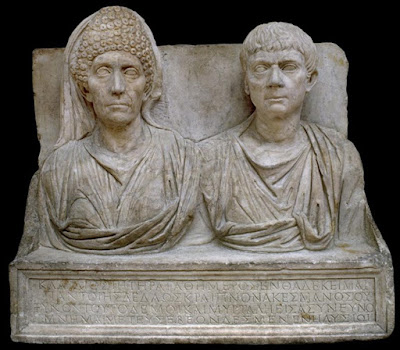
IGUR III 1247
(Photo: Ashmolean Museum, University of Oxford)

I, physician Claudius Agathemeros, who swiftly learned a remedy against all kinds of illness, rest here. This memorial is common to me and my wife Myrtale. We are in Elysium with the pious ones. (IGUR III 1247, Rome, ca. 50–100 AD)

Praise of a doctor is not unexpected in a votive inscription dedicated to the gods of healing and is quite formulaic in a physicians own funerary inscription. Still, such complimentary remarks show that physicians were not always the target of disparaging invective, but could be remembered fondly, just as in Cicero’s remarks about his doctors.

There are, however, many examples of more negative opinions expressed even in inscriptions. In a few inscriptions physicians are remembered for their inefficient treatments such as here:

CIL VI 68
(Photo: Wikimedia Commons)

Felix Asinianus, public slave of the priests, fulfilled his vow to Bona Dea Agrestis Felicula willingly after his eyesight was restored. Abandoned by doctors he was cured after ten months through medicine by the aid of his Mistress… (CIL VI 68, Rome, ca. 1–30 AD)

In this second one the doctors killed the patient:

CIL VI 37337
(Photo: Corpus inscriptionum Latinarum, Archiv)

To the spirits of the dead; Euhelpistus, a freed slave, who is also a Manes, lived 27 years, 4 months and 11 days. A sudden death took away his joyous years, a most innocent soul whom doctors cut up and killed. Publius Aelius Peculiaris, a freed slave of the emperor, [made this] to his fellow slave. (CIL VI 37337, Rome, ca. 101–150 AD)

Inscriptions such as these follow certain traditional forms and are not necessarily a good reflection of popular attitudes, although their content could be varied according to individual tastes and requests. We should look for further evidence in Roman graffiti which tended to be more spontaneous in both their content and how they were produced. The problem is, there are very few graffiti that mention physicians at all, and the ones that do, usually do so in passing.

Graffiti: few mentions of physicians

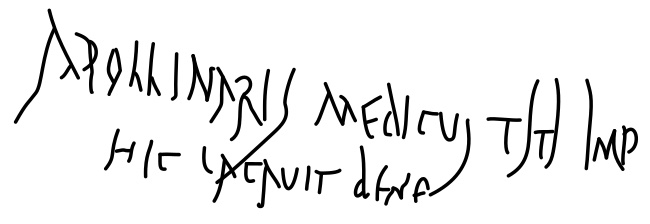
From Herculaneum we have this famous graffito:

CIL IV 10619
(Photo: Wikimedia Commons)

Apollinaris, doctor, slave of emperor Titus, pooped well here. (CIL IV 10619)

This description of Apollinaris is quite neutral. And even if we want to detect an aspect of insult, it has more to do with the fact that he was defecating, not that he was a doctor.

In this graffito found in Ostia are threatened with oral rape:

– – Shit well and fuck the doctors in the mouth. (AE 1941,8)

This is clearly a hostile take on doctors, but we know nothing about the context or the motives of the writer of this graffito.

Among the Pompeian graffiti I have only found this mention of a man treating another man:

Pierus Celadus, priest of the cult of Augustus, treated Amandus, Papirius' slave. (CIL IV 8810)

The fact that illness was a common occurrence is reflected in a number of graffiti from Pompeii, such as this one making fun of a person suffering from hemorrhoids, which were believed to be the result of anal sex:

CIL IV 1820
(Photo: Varone 2012)

Chios, I hope your piles become sore again, so that they smart more than they smarted before. (CIL IV 1820)

In a few Pompeian graffiti the writer wishes disease for someone else, resembling a curse: 

I hope you will fall ill. (CIL IV 2960)

Greetings Asbestus, you should get ill. (CIL IV 762)

Insults against doctors are almost completely absent from Roman graffiti. It is difficult to say why this is when abuse against them is so prominent in Roman literature. There were physicians even in small towns like Pompeii. The most likely explanation for the absence of invective against physicians from the graffiti is that doctors simply did not warrant much attention in people’s lives. A visit to a doctor may have been a rare occurrence. And if the doctors were mostly itinerant ones, writing about them on the walls wouldn’t have made much sense. The prejudice against physicians expressed in Roman literary sources probably was familiar even to the non-elite, but this was simply not expressed in wall inscriptions.

Invective against physicians seems to have been a matter of literary expression and a point of discussion among the upper classes, rather than a popular topic among the ordinary people. The criticism of physicians in literary sources was, at least in part, based on a more general prejudice against the Greeks and their growing influence in Rome. The accusations of malpractice and harmfulness of the physicians was likely based on reality because the ancient medical theories led to ineffective and dangerous treatments. The negative beliefs about physicians discussed here were popular in the sense ”widely held”, at least among certain literary circles, but not ”popular” in the sense that the wider public would have expressed them in their occasional writings.


This blog post is based on a paper I gave at the 14th annual conference of the International Society for Cultural History in Verona, Italy in August titled "Popular beliefs about physicians in ancient Rome". The PowerPoint slides can be found through this link.

Translations:

Cicero in Twenty-Eight Volumes. XXVIII, ed. M. Cary, Cambridge 1989.

Cicero. Letters to Atticus, ed. E.O. Winstedt, Cambridge–London 1987.

The Greek Anthology, Books X–XII, ed. by W. R. Paton, Loeb Classical Library 85, Cambridge MA 1918.

Martial, Epigrams, Vol. 1–3, ed. by D. R. Shackleton Bailey, Loeb Classical Library 94, 95 & 480, Cambridge MA 1993.

Pliny the Elder, Natural History, Volume VIII: Books 28-32, ed. W. H. S. Jones, Loeb Classical Library 418, Cambridge MA 1963.

The translations of inscriptions and graffiti are my own.

Other sources:

AE = L’Année épigraphique

CIL IV = Corpus inscriptionum Latinarum, vol. 4, Inscriptiones parietariae Pompeianae Herculanenses Stabianae, Berlin, 1871–.

CIL VI = Corpus inscriptionum Latinarum, vol. 6, Inscriptiones urbis Romae Latinae, Berlin, 1876– 

IGURInscriptiones Graecae urbis Romae

Varone 2012 = A. Varone, Titulorum graphio exaratorum qui in C.I.L. vol. IV collecti sunt, imagines, ”L’Erma” di Bretschneider, Roma 2012.

Feb 7, 2022

Roman Insults: Impotent Men and Lusty Women

I presented my PhD research at a meeting of AIAC here in Rome a couple of weeks ago. In my presentation I highlighted certain stereotypes attached to men and women that I've encountered in the poems of Martial and in Pompeian graffiti. Men were typically mocked as old and sexually feeble, and women as old and lusty. I've collected some of the examples from my presentation in this blog post.

Warning: contains sexual obscenities and visual portrayals of sex from Pompeii

A maenad and a satyr, a fresco from a private house in Pompeii 

One of the most apparent features connected to old age in Roman insults is baldness. Martial in particular often describes both men and women as bald when he wants to emphasize their age. He writes for example:

You fabricate false hair with ointment, Phoebus, and your dirty bald pate is covered with painted locks. No need to call in a barber for your head. A sponge can shave you better, Phoebus. (Mart. 6.57)

Marinus, you collect your scattered locks from this side and from that, and cover the broad expanse of your shining baldness with hair from your temples. But at the wind’s bidding they move and return and are restored to themselves, to surround your bare top with big curls on either side. You would think that Cydas’ Hermeros was standing between Spendophorus and Telesphorus. Why not be straightforward and admit to being an old man, so that at last you look like one man? Nothing is uglier than a bald-head with a lot of hair. (Mart. 10.83)

In his vanity Marinus only manages to bring out his baldness, not to conceal it. (Hermeros was apparently renowned for his baldness and Spendophorus and Telesphorus young men with plentiful hair.)

If Ligeia has as many years as she carries hairs on her entire head, she is three years old. (Mart. 12.7)

This poem ends with a twist typical of epigram when a balding woman is compared to a three year old. The contrast between these mental images adds to the humor of the poem.

Baldness is a recurring feature in many caricature drawings of men found in Pompeii.

Peregrinus (CIL IV 1810)
Rufus est (CIL IV 9226)
(CIL IV 10239)
These are just a few examples. Many similar drawings of bald or balding men have been found in Pompeii. Textual references to baldness in Pompeian graffiti, on the other hand, are few. I've only found one clear insult: "Romulus is bald" (Romulus cal(v)os, CIL IV 5148). The first writer wrote calos 'beautiful', but later some witty graffitist added a small letter V turning beauty into baldness. In another graffito Epaphra is ridiculed as hairless (Epaphra glaber est, CIL IV 1816), but this is more likely a reference to depilation than baldness.

Unambiguous references to old age are rare in Pompeian graffiti in general. One such insult is "Helenus is an old faggot" (Helene cina(ede) vetusc(ule), CIL IV 4206). Old age is here associated with passive homosexuality. The word cinaedus means, among other things, a person who is penetrated anally. Another graffito notes that "when an old man lies on his back, his scrotum covers his arse, when an old man lies on his back..." (seni supino colei culum tegunt, seni supino, CIL IV 4488).

The virility of men is derided in other ways as well. Martial writes very frankly about impotent men: 

You have thirty boys and as many girls; you have one cock, and it doesn’t rise. What will you do? (Mart. 12.86)

That over-active cock, well known to girls not a few, has ceased to stand for Linus. Tongue, look out! (Mart. 11.25)

Linus' only choice is to satisfy women with his tongue, which was the most humiliating sexual act for a Roman man, as the sexual roles of the man and the woman were reversed.

There is no mention of impotent men in Pompeii, but there are some graffiti that expose the lack of sexual prowess of some men such as "Messius fucked nothing here" (Messius hic nihil futuit, CIL IV 5187) and "Iucundus fucks badly" (Iucu(n)dus male c(h)ala(t), CIL IV 8715b). In one graffito a certain Phileros is called a eunuch (Phileros spado, CIL IV 1826). Below this graffito is a drawing of an ithyphallic man, which, if it belongs together with the text, may mean that the message was ironic. Another possibility is that the drawing represents Phileros' response to the insult directed at him.

Drawing of an ithyphallic man in the basilica of Pompeii
(photo: Varone 2012, 354)
The masculinity of men is also called into question in those graffiti in which they are insulted as passive homosexuals (cinaedus), cuntlickers (cunnilingus) and cocksuckers (fellator). There are dozens of these insults in the Pompeian graffiti.

Old age is a frequent theme of insults against women as well. Hera are two examples from Martial:

Afra has mamas and dadas, but she herself may be called the grandmama of dadas and mamas.(Mart. 1.100)

Caerellia says she’s an old lady, though she’s just a doll. Gellia says she’s a doll, though she’s an old woman. One can’t abide either of the two, Collinus: one is absurd, the other nauseating. (Mart. 4.20)

I've only found one direct reference to old women in the Pompeian graffiti: "Erotarin, you jealous old crone" (Erotarin vetula selotia, CIL IV 9945). This shows that the stereotype of old women was not very active among the writers of graffiti in Pompeii, even though it's a common topic in the poems of Martial, in Greek epigram and in Roman comedy, for example.

In contrast to old men, who were often ridiculed as sexually weak, old women – and women in general – were often described as lusty. Martial writes:

Lesbia swears that she has never been fucked free of charge. It’s true. When she wants to be fucked, she is accustomed to pay cash. (Mart. 11.26)

Lesbia appears to be a prostitute, but she must be an aging prostitute, since she now has to resort to paying for sex herself. The roles of the prostitute and the client, of the man and the woman, are again reversed. 

Do you ask why your Caelia has only eunuchs, Pannychus? Caelia wants to be fucked, but not to have children. (Mart. 6.67)

Eunuchs were ideal lovers since their testicles had been cut off and there was no risk of pregnancy.

In some Pompeian graffiti women are portrayed as sexually active, for example: "Euplialla has a loose vagina and a huge clitoris" (Euplia laxa landicosa, CIL IV 10004). The physical appearance of Euplia shows that she has had too much sex. Euplia is named as a prostitute in a couple of other graffiti, but we can't be sure that it is the same woman.

The sexual lust of women is hinted at in such graffiti as "Nymphe is a cocksucktress" (Nympe felatrix, CIL IV 1389) and "Meroe is a fucktress" (Meroe fututrix, CIL IV 4196). Both of these words, fellatrix and fututrix, have the feminine agent noun ending -trix which points to the women's active role in sex. They were not just passive recipients but active participants, which ran against women's normative role of passivity in sex. These derivatives fellatrix ja fututrix are only found in graffiti in our extant Latin sources.

In addition to graffiti there were plenty of visual representations of women engaged in sex on the walls of Pompeii. Frescoes depicting sexual acts have been found both in brothels and in private houses.

A fresco from the Lupanar, the purpose-built brothel of Pomeii

A fresco from a private house in Pompeii (house V 1,26)

These paintings don't appear to portray women in a negative light. There were other motives for the choice of content, either aesthetic or practical. According to one theory, such images, when found in the context of a brothel, were a sort of a menu of sexual services on offer. Nonetheless, this visual material may have reinforced the idea of women as sexually active and lusty, and could have contributed to insults and attacks on women in wall inscriptions.

Many themes and terms of abuse in the poems of Martial and in Pompeian graffiti were not gender-specific. Both men and women were lampooned as old, diseased and ugly, for instance. There were, however, certain stereotypes attached to each gender such as those of impotent men and lusty women as described above.


The poems of Martial: D. R. Shackleton Bailey, Martial: Epigrams, Loeb Classical Library, Harvard University Press, 1993.

Pompeian graffiti: CIL IV = Corpus inscriptionum Latinarum, vol. 4, Berlin, 1871–. The translations are my own.

The caricature drawings of men are from the CIL IV. The photos of the frescoes are my own.

The photo of the ithyphallic man: A. Varone, Titulorum Graphio Exaratorum qui in C.I.L. vol. IV collecti sunt : imagines, ”L’Erma” di Bretschneider, 2012.